
If you drive around the Bay Area every day, you know the routine: morning commutes, long stretches on I-880, I-680, or I-101 and traffic building up just as you’re about to exit. For a lot of us, the car becomes a second “room”; it’s where we start our day, decompress after work, and spend more time than we realize.
And that’s exactly when a factory system starts showing its limits.
At first, stock audio seems fine. But once you’re spending real time behind the wheel, you begin to notice the missing details: vocals that sound flat, bass that disappears when the volume goes up, and a general feeling that the music never sounds as clean or full as it should. In the Bay Area, where your drive time adds up quickly, those little audio shortcomings become impossible to ignore.
That’s why Car Audio isn’t just about having music in the background. It’s comfort. It’s clarity. It’s the difference between a drive that feels long versus a drive that feels enjoyable. And if you’ve ever tried to enjoy your playlist while road noise is creeping in from the freeway, you already know sound quality matters more than people think.
In this guide, we’re going to break down what a real Car Audio Upgrade changes (and what it doesn’t), why factory audio often falls short, what “better sound quality” really means inside a vehicle, and which upgrades give Bay Area drivers the biggest improvement first.
What Counts as a Car Audio Upgrade (And What Doesn’t)
A real Car Audio Upgrade is not just “making it louder.” That’s probably the most important clarification we can make upfront, because volume is easy. Sound quality is not. In fact, when a system is underpowered or poorly tuned, raising the volume often makes everything worse: harsh highs, muddy mids, and distortion that makes music feel tiring instead of enjoyable.
A true Car Audio Upgrade improves how sound is reproduced inside the cabin. That means you can hear more detail, better balance, and cleaner bass without needing to blast the volume just to “feel” the music.
At a high level, most upgrades fall into these categories:
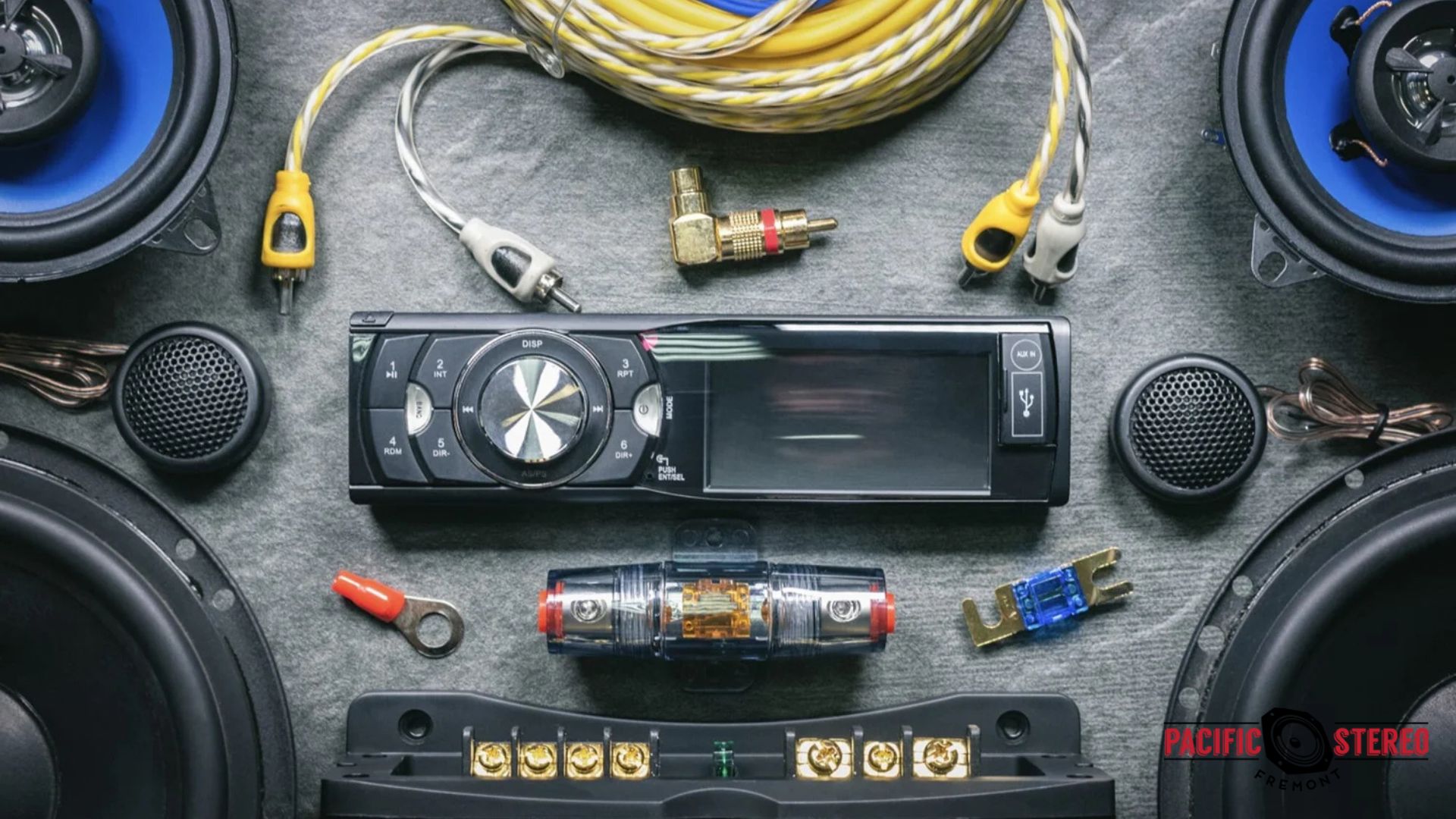
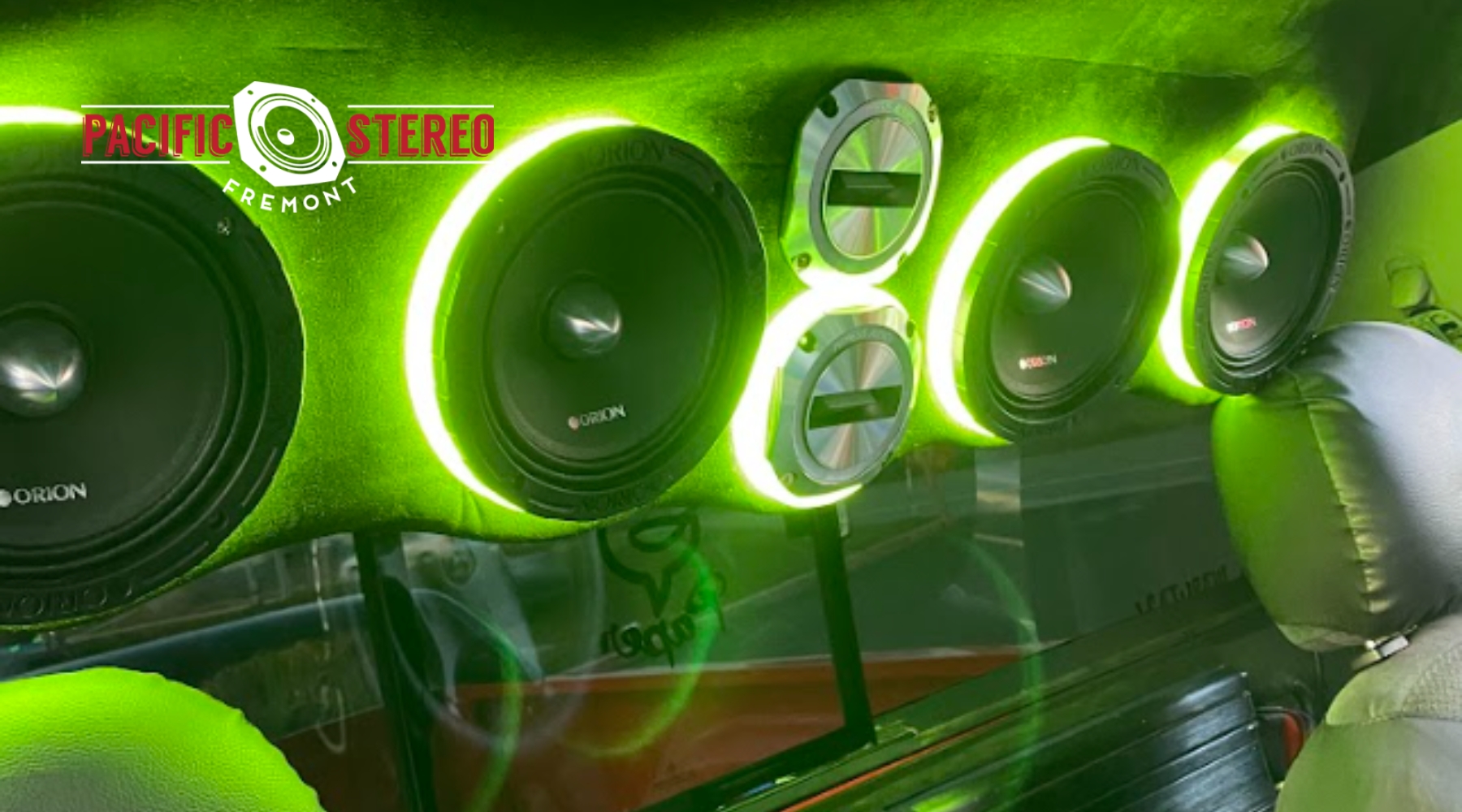
- Speaker upgrades (better clarity and accuracy)
- Amplifiers (clean power and control)
- DSP Tuning (custom sound staging and precision)
- Subwoofers (controlled low-end, not just boom)
- Head Unit Integration (upgrading sound while keeping factory features)
In other words, this isn’t about showing off. It’s about turning a basic stock system into something that actually feels like premium car audio, without compromising your vehicle’s original functionality. That’s also why people refer to it as a sound system upgrade or aftermarket audio, because it’s designed around performance, not just output.
The Real Reasons Factory Sound Systems Fall Short
Here’s something we always tell Bay Area drivers who feel disappointed with their stock system: factory sound systems aren’t “bad,” they’re just built for mass-market priorities.
Automakers have to balance cost, production simplicity, and broad appeal. That usually means compromises in a few key areas: speaker materials, power delivery, placement, and tuning. Even when a vehicle advertises a name-brand audio package, the real-world result still depends on how it’s tuned for the cabin, and tuning is where a lot of systems fall short.
One of the most common issues is distortion at higher volume. You turn it up hoping for more impact, and instead the sound starts to break down. That’s not your imagination–it’s the system reaching its limits. Bass is usually the first thing to disappear because low frequencies require power and control, and stock systems typically don’t have enough of either.
The key point is this: the problem usually isn’t that you’re “too picky.” It’s that factory systems are designed to be acceptable for everyone, not excellent for someone who actually cares about how music should sound.
What “Better Sound Quality” Actually Means Inside a Car
Sound quality isn’t one single thing. It’s a group of improvements that make music feel more realistic, more enjoyable, and easier to listen to for long drives.
When we talk about better sound in a vehicle, we’re talking about:
- Clarity: vocals sound clean, not buried
- Balance: highs, mids, and lows feel natural together
- Sound staging: music feels like it’s in front of you, not stuck in doors
- Detail: you hear layers in tracks you’ve never noticed before
- Bass control: low end is deep and smooth, not rattly or overpowering
And vehicles are honestly one of the hardest places to achieve great sound. Bay Area drivers experience it daily: freeway noise on I-880, uneven pavement that adds vibration, and cabin acoustics that bounce sound off glass and panels. Unlike a living room, a car is full of reflective surfaces and constant ambient noise.
That’s why upgrades like audio clarity, sound staging, and clean bass matter so much here. You’re not just upgrading music, you’re upgrading how the entire drive feels, especially on longer commutes where fatigue builds up faster than people realize.
Upgrade Options That Make the Biggest Difference First
When someone asks us where to start, we always begin with one question: what do you want your system to feel like?
Some Bay Area drivers want their music to sound cleaner at normal volume during traffic. Others want real bass that doesn’t distort. Others want a balanced system that makes everything sound premium, from podcasts to playlists.
The smartest approach is prioritizing upgrades that deliver immediate improvement without wasting budget. In most vehicles, you’ll feel the biggest jump with a focused combination of components rather than trying to change everything at once.
Here are the most noticeable improvements Bay Area drivers get first:
- Speaker upgrade for clearer vocals and better detail
- Amplifier installation for clean power and less distortion
- Subwoofer upgrade for real low-end and controlled bass response
- DSP tuning for staging, balance, and a “custom tuned” sound signature
Once those pieces are chosen correctly, the system stops sounding like “car speakers” and starts sounding like something intentional. The goal isn’t to overbuild; it’s to build smart, so every drive feels smoother, more enjoyable, and honestly more premium.
Speakers vs Amplifiers vs Subwoofers: What Each One Improves
When Bay Area drivers ask us what they should upgrade first, the biggest confusion usually comes from not knowing what each component actually changes. A lot of people assume speakers are everything, or that a subwoofer is only for bass-heavy music, or that amplifiers are optional.
In reality, each one solves a different sound problem, and the best results usually come from pairing the right components together instead of upgrading a single part on its own.
Here’s the simplest breakdown of what each upgrade improves:
- Speakers improve clarity and detail, especially vocals and instrument separation
- Amplifiers improve clean power, meaning less distortion and better control at any volume
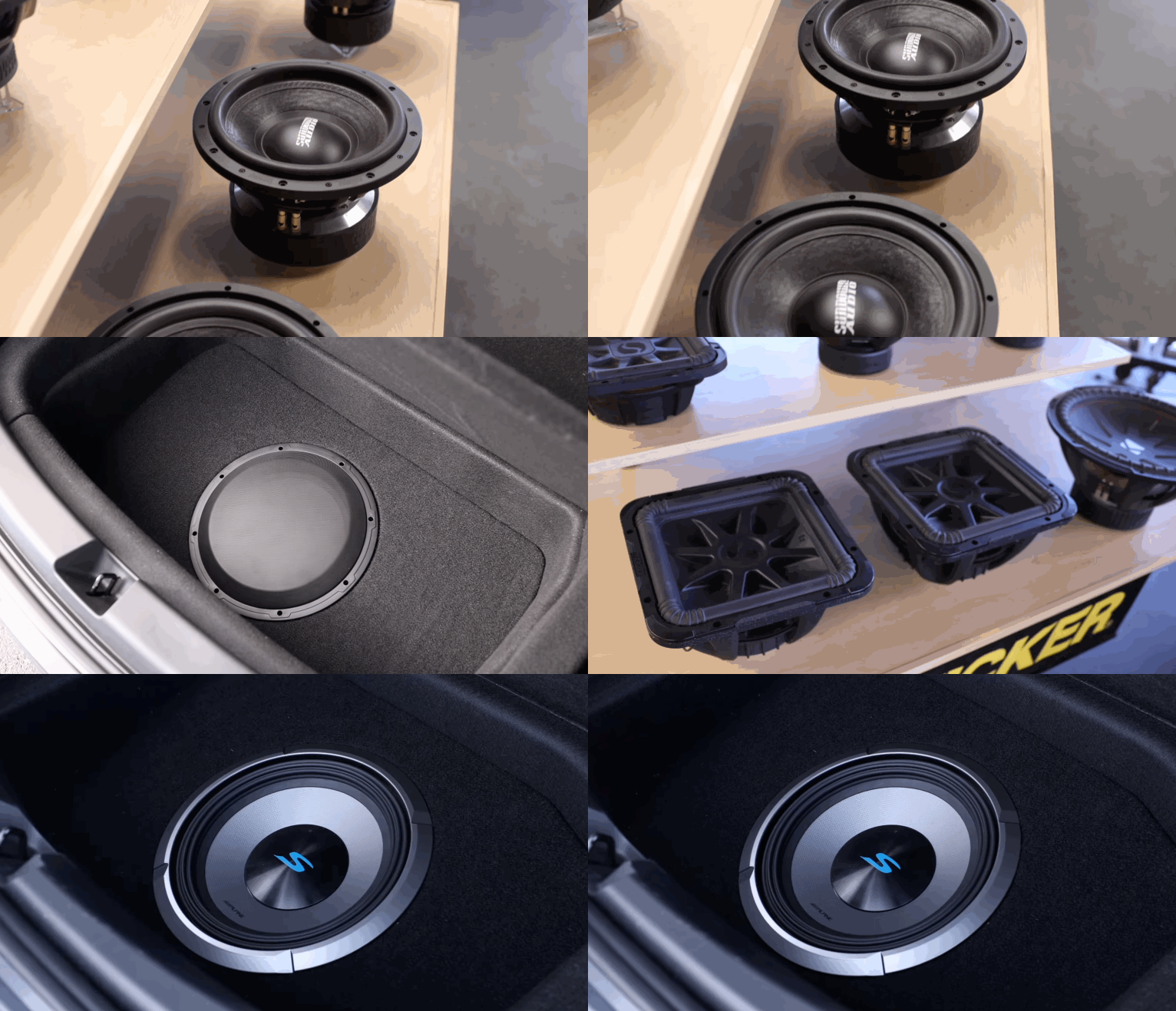
- Subwoofers improve bass response, giving depth and fullness without forcing door speakers to struggle
The most common misconception is that a subwoofer is only for people who want their car shaking. That’s not what a properly designed system does. A good sub fills in the low end that factory speakers can’t reproduce cleanly, so the entire sound feels richer and smoother. Even if you mostly listen to podcasts, pop, rock, Latin music, or jazz, clean bass makes everything sound more complete.
And this is where pairing matters. Great speakers still won’t shine if they’re underpowered. A speaker upgrade with weak factory power often sounds “better,” but not dramatically better. Once you add clean amplification, the same speakers suddenly come alive.
At Pacific Stereo Fremont, we focus on Bay Area-friendly upgrades that match real driving habits, meaning systems that sound great during your daily commutes on I-680, I-880, or I-101 and during weekend drives, without forcing you into a setup you don’t actually need.
Integration Matters: Keeping Factory Features While Upgrading Sound
Modern vehicles are not like old-school cars where you could swap a radio in 20 minutes and call it a day. Most newer vehicles rely heavily on factory infotainment systems.
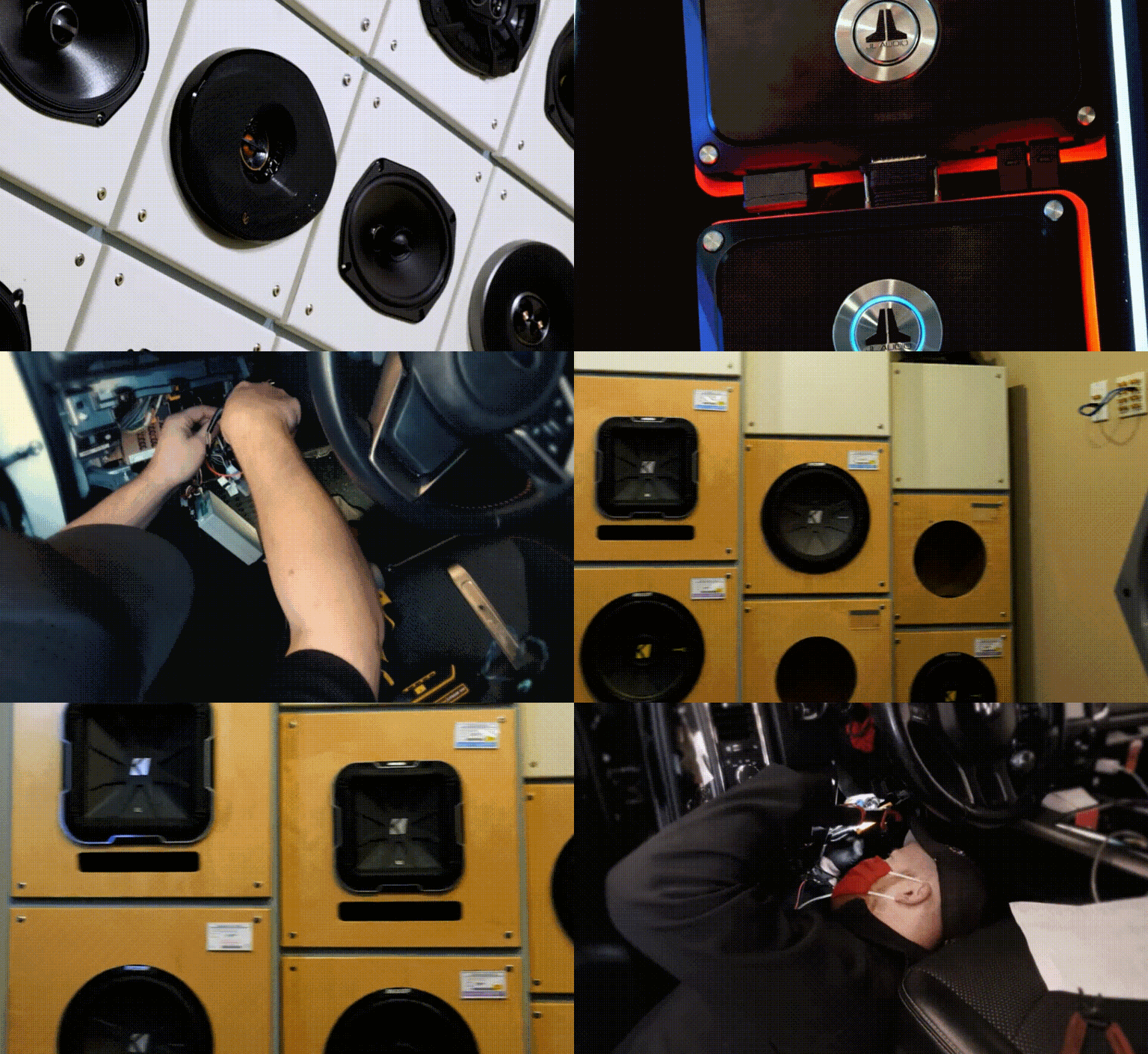
That means upgrading sound without smart integration can create problems: losing steering wheel controls, glitchy features, warning chimes, or poor Bluetooth behavior. A quality upgrade should never feel like a downgrade in usability.
Professional audio work is about upgrading the sound while keeping your vehicle’s factory experience intact. Done right, the car still looks like the original equipment manufacturer (OEM) inside, still works like it should, and feels clean and intentional.
That’s why we prioritize:
- OEM integration that respects the vehicle’s architecture
- Steering wheel controls retention
- Factory radio retention when needed
- Clean installation (hidden wiring, clean panel work, reliable performance)
In other words, the sound gets better, but the vehicle still feels like your vehicle, just upgraded.
How Local Bay Area Driving Makes a Car Audio Upgrade Even More Worth It
The Bay Area is a place where you don’t just “drive to the store.” A lot of people here rack up real driving time without thinking about it. Daily commutes onI-101, I-880 or I-680, longer drives to San Jose, weekend trips into San Francisco, and routes that cross the Bay Bridge add up quickly.
And the truth is, the more time you spend in the car, the more valuable comfort upgrades become. Audio isn’t just entertainment–it changes how the drive feels mentally.
A high-quality Car audio upgrade reduces fatigue in a few ways. Cleaner sound means you don’t strain to hear vocals over road noise. Balanced audio means you can listen at lower volumes without losing detail. Better bass control makes music feel smooth instead of sharp or tiring.
It also fits real life, where people constantly shift between different listening modes, from podcasts and phone calls to playlists and family-friendly listening.
A better system makes all of that easier and more enjoyable, without forcing you to constantly adjust volume and settings during every drive.
Conclusion: Better Sound Isn’t a Luxury, It’s a Better Drive
A quality Car Audio Upgrade changes the way your entire vehicle feels. It’s not just about louder music, it’s about clarity you can actually hear, balance that makes every genre sound right, and bass control that adds depth without distortion. Once the system is built correctly, your daily commute stops feeling like background noise and starts feeling like a more comfortable, more enjoyable part of your day.
And in the Bay Area, that upgrade makes even more sense. When you’re spending real time sitting in traffic, driving across the Bay or San Mateo Bridges, or taking weekend routes to San Francisco or San Jose, your car becomes more than transportation. It becomes your space. Better audio reduces fatigue, improves the way you experience music and podcasts, and makes long drives feel shorter.
If you’re ready to improve your sound system the right way, the team at Pacific Stereo Fremont is here to help. We’ll walk you through the best options for your vehicle, recommend a setup that fits your goals and budget, and deliver an install that looks clean and performs exactly the way it should. Contact us today to schedule your consultation and get started on a Car Audio Upgrade that genuinely upgrades your daily drive.
Pacific Stereo Fremont
address
40955 Albrae St, Fremont, CA 94538, United States
Phone Number
+1 510-656-6677
Open hours
Sunday Closed
Monday to Saturday 9 AM–6:30 PM